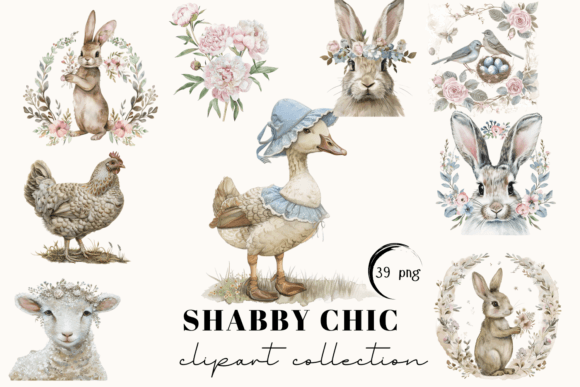
Shabby Chic Animals & Watercolor Clipart Collection
There's a particular kind of warmth that comes from combining nature-inspired illustration with a vintage, slightly worn aesthetic. The Shabby Chic Animals and Flowers Collection captures exactly that feeling—soft watercolor renderings of woodland creatures and garden animals, each adorned with delicate floral accents. These aren't sterile, overly polished graphics. They carry a gentle imperfection, a hand-painted quality that makes them feel personal and inviting.
For designers, crafters, and small business owners who work in the lifestyle, handmade, or boutique space, this kind of creative font and illustration style speaks volumes without trying too hard. It whispers rather than shouts, which is precisely its strength.
What Makes This Watercolor Clipart Collection Stand Out
At its core, this set delivers 39 individual illustrations rendered in a soft watercolor palette. Each animal—from rabbits and foxes to birds and deer—is paired with roses, peonies, wildflowers, or trailing greenery. The vintage-inspired designs blend muted pastels with slightly faded edges, creating that signature shabby chic look that has remained popular in editorial design, packaging design, and home décor for years.
The illustrations come as transparent PNG files at 300 dpi, sized at 7 by 7 inches. That resolution works well for both digital and print applications. Whether you're designing a wedding invitation suite, building a product label for handmade soaps, or creating social media graphics for a boutique brand, the files are ready to drop into your workflow without additional prep work.
Transparent backgrounds are a practical detail worth emphasizing. They let you layer these illustrations over textured papers, colored backgrounds, or photographs without awkward white boxes or masking headaches. For anyone working in Photoshop, Illustrator, Canva, or Procreate, this saves considerable time.
Where Shabby Chic Illustrations Work Best
The appeal of this collection extends across a surprisingly wide range of projects. Here's where these illustrations tend to shine:
- Branding and logo design for artisan businesses, florists, bakeries, pet boutiques, and children's clothing lines. The soft, approachable aesthetic communicates warmth and craftsmanship.
- Packaging design for handmade goods, candles, teas, bath products, and gift sets. The watercolor style pairs beautifully with kraft paper, linen textures, and muted color palettes.
- Scrapbooking and card-making. This is perhaps the most natural home for shabby chic clipart. The illustrations layer beautifully with vintage serif fonts or elegant script fonts.
- Wedding and event stationery. Save-the-dates, menus, place cards, and programs all benefit from this romantic, nature-inspired style.
- Blog graphics and website design for lifestyle, parenting, gardening, or wellness niches. Used as accent illustrations, they add personality without overwhelming the layout.
- Digital planners, journals, and printable art. The 300 dpi resolution ensures crisp output for home printing or professional reproduction.
What ties all these applications together is audience expectation. People drawn to shabby chic aesthetics tend to value authenticity, softness, and a handmade sensibility. These illustrations meet that expectation immediately, which matters for brand identity and audience engagement.
Pairing These Illustrations with Typography
Clipart doesn't exist in isolation. The typeface you pair with these illustrations will shape how the overall design reads. A few observations from working with similar design assets:
A delicate handwritten font or script font complements the watercolor style naturally. Think of names like Playlist, Sacramento, or similar flowing typefaces that echo the organic quality of the brushwork. For body text or supporting information, a clean sans serif font in a light weight keeps things readable without competing visually.
Avoid pairing these illustrations with heavy, geometric typefaces or ultra-modern display fonts. The contrast tends to feel disjointed. Instead, look for font pairing options that share the same warmth—slightly rounded letterforms, moderate contrast, and a relaxed rhythm.
If you're building a brand identity around this aesthetic, consistency matters. Use the same two or three typefaces alongside these illustrations across your website, packaging, and social media graphics. Repetition builds recognition, and recognition builds trust.
Practical Considerations Before You Start
A few things worth thinking through before incorporating this collection into your projects:
- Check the licensing. The listing notes this is a digital purchase. If you plan to use the illustrations in commercial products—items you sell, client work, or printed merchandise—confirm the license terms. Most clipart licenses distinguish between personal and commercial use, and some limit the number of end products.
- Test print quality. At 300 dpi and 7 inches, these files hold up well for standard print sizes. If you're planning large-format printing (posters, banners), you may need to check how they scale. Watercolor textures can lose their charm when enlarged beyond their native resolution.
- Consider color adjustments. The muted palette is part of the appeal, but depending on your project, you might want to shift the hue or saturation slightly. Most editing software handles this easily with PNG files.
- Organize your files. With 39 individual illustrations, a quick naming and folder system will save you time down the road. Group them by animal type, floral arrangement, or project category—whatever makes sense for your workflow.
Building a Cohesive Aesthetic
The real value of a collection like this lies in how well the pieces work together. Each illustration shares the same visual language—soft edges, consistent color temperature, similar floral motifs. That internal consistency is what separates a premium font or illustration set from a random assortment of clip art.
When you use multiple illustrations from the same set across a project, the result feels intentional. A wedding suite where the save-the-date, program, and thank-you card all feature different animals from this collection creates a unified story. A product line where each item features a different creature but the same artistic hand feels curated rather than assembled.
That cohesion is something audiences notice, even if they can't articulate it. It communicates professionalism and care—qualities that matter whether you're a designer presenting to a client, a small business owner building a product line, or a blogger creating a visually consistent brand.
The Shabby Chic Animals and Flowers Collection offers a specific aesthetic, and it executes that aesthetic with quality and consistency. For anyone working in the spaces where vintage charm, natural beauty, and handcrafted warmth resonate with their audience, it's a practical addition to your design assets library.
For more resources and weekly freebies, visit the Aneta Design Store newsletter.